Here is a great article by Cheryl Rainfield with writing tips:
Top Ten Ways to Dramatically Improve Your Writing
Showing posts with label reading. Show all posts
Showing posts with label reading. Show all posts
Saturday, May 8, 2010


Does Stephen King Hate Adverbs?
Stephen King said, "The road to hell is paved with adverbs."
I understand this, but don't necessarily agree. It's true that too many adverbs can make your writing seem amateurish and lacking in real content. However, I happen to like a well-placed adverb. If a character walks, I'd like to know how he walks. Does he walk softly? Does he walk crookedly? Does he walk briskly or slowly? I suppose a writer could find a different word than "walk". Skips, strides, glides, sneaks, tiptoes, etc. But sometimes a plain and simple verb works best, with a nice ripe adverb to make it tasty.
If you were to peruse Stephen King's books, I'm sure you will find adverbs. And I think I know what he meant in this quote. He is a talented and prolific writer and could not possibly be suggesting that we never use adverbs. I think he is suggesting we use them like a spice, sparingly and for flavor without overwhelming the literary palate.
Apparently Mark Twain shared this distaste for adverbs as well.
I understand this, but don't necessarily agree. It's true that too many adverbs can make your writing seem amateurish and lacking in real content. However, I happen to like a well-placed adverb. If a character walks, I'd like to know how he walks. Does he walk softly? Does he walk crookedly? Does he walk briskly or slowly? I suppose a writer could find a different word than "walk". Skips, strides, glides, sneaks, tiptoes, etc. But sometimes a plain and simple verb works best, with a nice ripe adverb to make it tasty.
If you were to peruse Stephen King's books, I'm sure you will find adverbs. And I think I know what he meant in this quote. He is a talented and prolific writer and could not possibly be suggesting that we never use adverbs. I think he is suggesting we use them like a spice, sparingly and for flavor without overwhelming the literary palate.
Apparently Mark Twain shared this distaste for adverbs as well.
Friday, May 7, 2010
Dirty Words in Erotica
Now, there is nothing wrong with calling a spade a spade, but when it comes to erotica that I enjoy reading, it's something of a turn-off (for me personally) to have body parts crudely described. That kind of rhetoric has its place, for certain, but many women (and possibly men too) do not find it romantic or titillating. If the tall dark and gorgeous hunk looks into the sultry woman's eyes and says, "I know what you need; you need my big throbbing cock in your hot wet pussy", I've lost interest. I expect the heroine to say "go straight to hell, buddy, and take your ego with you". However, if he gazes deep into her eyes and says, "I want you so much I think I'll explode" then I'm right there on the page with her. If he says "Let me slide into you and feel you around me; let me taste you; let me take you", then I'm still hanging on. I guess that makes me vanilla.
Yet even with that said, I realize there is an audience who likes their erotica straightforward, without frills and euphemisms, and directly to the point. Therefore, I am not discounting that style of writing. And I will probably utilize it in future works. I guess that makes me a vanilla hypocrite! Guilty as charged!
It will be interesting to slap some hard unforgiving terms into the text of my next novel. Kind of like adding hot pepper to a dish. It gets your attention.
Yet even with that said, I realize there is an audience who likes their erotica straightforward, without frills and euphemisms, and directly to the point. Therefore, I am not discounting that style of writing. And I will probably utilize it in future works. I guess that makes me a vanilla hypocrite! Guilty as charged!
It will be interesting to slap some hard unforgiving terms into the text of my next novel. Kind of like adding hot pepper to a dish. It gets your attention.
Wednesday, May 5, 2010
Are Upper Management People Too Delicate?

According to Forbes Magazine, there is a list of words that should never be used at work because of their negative connotations. One of these words is "try". Forbes believes "try" is a weasel word, weak, and indicative of a person who is building in an excuse for failure. I disagree. Rational people know that trying is better than not trying, and they know that all anyone can do is try. Taking the will-do attitude is certainly commendable, but sometimes the person who says they "will" do something is really saying he will try. There is no guarantee he will succeed. I would rather have someone tell me he will try rather than say he will, if he knows from the outset that his success is only probable. To say "will" instead of "try" is to buffer the truth so the people in charge can dismiss the item from their worry list. Are our managers, CEO's, and supervisors really that delicate?
The second word an employee should never use according to Forbes is "whatever". I happen to agree with them on this one. There are currently very few ways to use the word that do not suggest a dismissive rude attitude on the part of the speaker.
The next set of offensive words includes "I don't know" and "maybe". According to the article, these words can be used as an excuse for laziness. I don't know about you, but I think maybe sometimes these words mean exactly what they mean. It doesn't make an employee more valuable if he is willing to pretend to know something which he does not know, or to give a definite answer when reality is somewhat less certain. If a person does not know something, it's far better to admit it, and then find out how to access the information. And if something is uncertain, a maybe, it's preferable to admit it. I understand the point in the article that employees should not be allowed to slide by on those words and use them as an excuse for inaction. But, it is what it is. Sometimes maybe we just don't know.
Forbes warns against people who say "I'll get back to you". I wonder what is wrong with the boss who keeps an employee on the payroll who routinely fails to follow up? It makes no sense to me to blame the words. Obviously, this employee is not up to the task and perhaps should be culled from the herd. It's a personnel problem, not a verbiage problem.
"Yes, but" annoys this Forbes writer. However, there are times when it is necessary to clarify a point. "Yes, but" is a useful tool that allows examination of possible obstacles that will need to be addressed or mitigated.
"I guess" and "we'll see" made the list as well. "I guess" does indicate some indecision and could probably be replaced with a clearer sentence. However, bosses may not want to accept this, but oftentimes an employee will use the words "I guess" with an employer who is wrong but cannot tolerate dissent. Using the words "I guess" is a very handy way to distance an employee from the boss's wrongheaded thinking without pissing off said boss. "We'll see" reminds the writer of parents postponing a decision. This is not the employee's issue; it is the boss's. Sometimes we won't know something until we see it. I do agree the concept could be better worded. For instance, it could be said "the answer will soon be apparent, once all the information has come in" or something to that effect.
In conclusion, it's disturbing to think employees have to micromanage very word out of their mouths to avoid upsetting the tender ears of a temperamental boss. More important than the words used by an employee is his or her work product. Judgment of an employee's value to a company should always be performance-based.
Tuesday, May 4, 2010
Starving Artists Must Live Cheap
Until your first big break happens, or your first paintings sell, or your first novel goes stellar, it can be difficult to make ends meet. But how far are you willing to go in the name of thrift?
Entertainment. First of all, the best entertainment value for your dollar is a book. A good book can be read many times. And when you are ready to let it go, it can be donated. Consider also spending your leisure time honing your craft. Or walking (which is also good exercise). Some other cheap forms of entertainment include the library, window shopping, free festivals and gatherings, playing games at home, or writing letters to long lost friends and relatives or to politicians who have aggravated you.
Cheap eats. Everyone who has ever lived on a brutal budget knows the praises of peanut butter, macaroni & cheese, soup and a sandwich, and omelets. But how about beans and tortillas? Not only are they good for you with all the complex carbs, but they are low cost. Especially if you buy the dried beans and learn how to prepare them from scratch. Dash of Tabasco sauce, a sprinkle of grated cheese, and yum!
Veggies are expensive! But a lot of them are easily home grown such as tomatoes, green beans, and lettuce. I grow mine in pots on the patio. They taste so much better than the waxy artificial-looking store varieties. Let me toss out there a few more cheap meal ideas: pancakes or French toast, potato soup, beans & weenies, or the ever-popular Ramen noodles.
Laundry soap is exorbitant. You can make your own and it works quite well as long as you remember to pour a half cup of white vinegar in the rinse cycle. I made a simple recipe of 1 cup grated Ivory soap, half a cup of Borax, and half a cup of baking soda. Just use 1 to 2 tablespoons for each load of laundry. I still have to use a dryer sheet or I will get the dreaded static cling, but I cut those in half so a box does twice the number of loads. If you are adventurous enough to try making your own liquid laundry soap, here is a great website with instructions:
Cleaners are expensive. You can make your own surface cleaner by mixing white vinegar with equal parts of water. The smell does dissipate some after it dries. It cleans floors really well if you rinse them with clear water that has about a teaspoon of baby oil per gallon of water. I wouldn’t use this on wood floors, however. Vinegar water and old newspapers clean mirrors and glass pretty well. So you could save a few bucks on household cleaning supplies.
Face cream can be costly. If you don’t need all the fancy additives and supposed youth-restoring secret ingredients, plain old cocoa butter works pretty well. Some people swear by Vaseline.
New car? I don’t think so! I’d rather pay for repairs to my old one than take on another debt. New house? No way! I would rather paint the walls and make the upgrades to my existing home than take on a higher house payment. New clothes? Not often. Not when my city has an abundance of thrift stores with great merchandise and low prices.
There are some things even a tightwad will not scrimp on, including me. But I am willing to cut costs wherever I can until that big wave of fortune rolls over me.
Entertainment. First of all, the best entertainment value for your dollar is a book. A good book can be read many times. And when you are ready to let it go, it can be donated. Consider also spending your leisure time honing your craft. Or walking (which is also good exercise). Some other cheap forms of entertainment include the library, window shopping, free festivals and gatherings, playing games at home, or writing letters to long lost friends and relatives or to politicians who have aggravated you.
Cheap eats. Everyone who has ever lived on a brutal budget knows the praises of peanut butter, macaroni & cheese, soup and a sandwich, and omelets. But how about beans and tortillas? Not only are they good for you with all the complex carbs, but they are low cost. Especially if you buy the dried beans and learn how to prepare them from scratch. Dash of Tabasco sauce, a sprinkle of grated cheese, and yum!
Veggies are expensive! But a lot of them are easily home grown such as tomatoes, green beans, and lettuce. I grow mine in pots on the patio. They taste so much better than the waxy artificial-looking store varieties. Let me toss out there a few more cheap meal ideas: pancakes or French toast, potato soup, beans & weenies, or the ever-popular Ramen noodles.
Laundry soap is exorbitant. You can make your own and it works quite well as long as you remember to pour a half cup of white vinegar in the rinse cycle. I made a simple recipe of 1 cup grated Ivory soap, half a cup of Borax, and half a cup of baking soda. Just use 1 to 2 tablespoons for each load of laundry. I still have to use a dryer sheet or I will get the dreaded static cling, but I cut those in half so a box does twice the number of loads. If you are adventurous enough to try making your own liquid laundry soap, here is a great website with instructions:
Cleaners are expensive. You can make your own surface cleaner by mixing white vinegar with equal parts of water. The smell does dissipate some after it dries. It cleans floors really well if you rinse them with clear water that has about a teaspoon of baby oil per gallon of water. I wouldn’t use this on wood floors, however. Vinegar water and old newspapers clean mirrors and glass pretty well. So you could save a few bucks on household cleaning supplies.
Face cream can be costly. If you don’t need all the fancy additives and supposed youth-restoring secret ingredients, plain old cocoa butter works pretty well. Some people swear by Vaseline.
New car? I don’t think so! I’d rather pay for repairs to my old one than take on another debt. New house? No way! I would rather paint the walls and make the upgrades to my existing home than take on a higher house payment. New clothes? Not often. Not when my city has an abundance of thrift stores with great merchandise and low prices.
There are some things even a tightwad will not scrimp on, including me. But I am willing to cut costs wherever I can until that big wave of fortune rolls over me.
The Gypsy Pall. a novelette

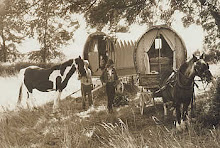
Introducing my new book, The Gypsy Pall. This historic erotica with a twist is set in the early 30's and tells the tale of Amos Hay, a plains farmer who offends a traveling gypsy. She retaliates by placing a "pall" on the county and strange things start happening. It was, after all, called the Dirty Thirties! Check it out.
Subscribe to:
Posts (Atom)